The recently completed retrofit at 360 Bridge Street in Brooklyn is a 400,000 sq. ft. telecommunications hub operated by Verizon. This project worked on by Emtec Consulting Engineers serves as a masterclass in how massive, energy-intensive facilities can achieve full electrification through heat recovery.
Historically, this seven-story landmark faced a common industrial inefficiency: server rooms required constant cooling via distributed CRAC units, while office spaces were simultaneously heated by aging fuel oil-fired steam boilers. By reimagining these isolated systems as a single, integrated loop, the Emtec design team turned “waste heat” into a primary energy source.
🏗️ From Legacy Steam to 100% Electric
The transformation centered on a shift from steam to a low-temperature hydronic system. This modern approach allows the building to “put its heat to work” rather than simply rejecting it into the atmosphere.
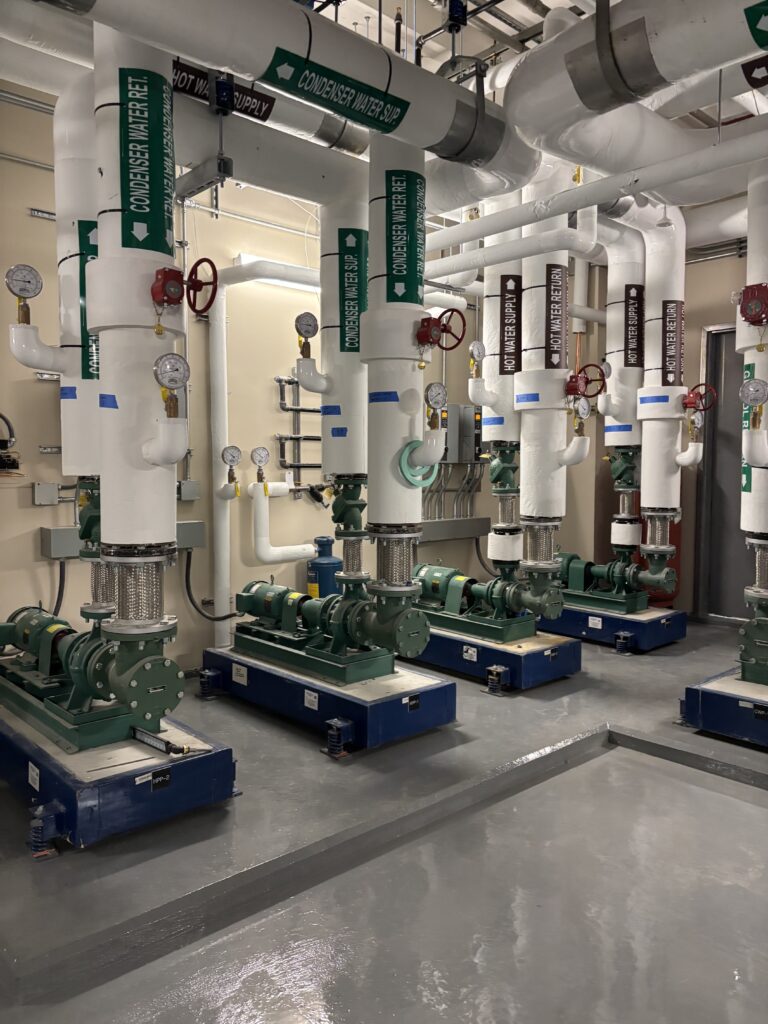
- Centralized Condenser Loop: New high-efficiency, water-cooled units replaced old CRACs. By tying these into a single loop, heat from across multiple equipment rooms is now captured and managed collectively.
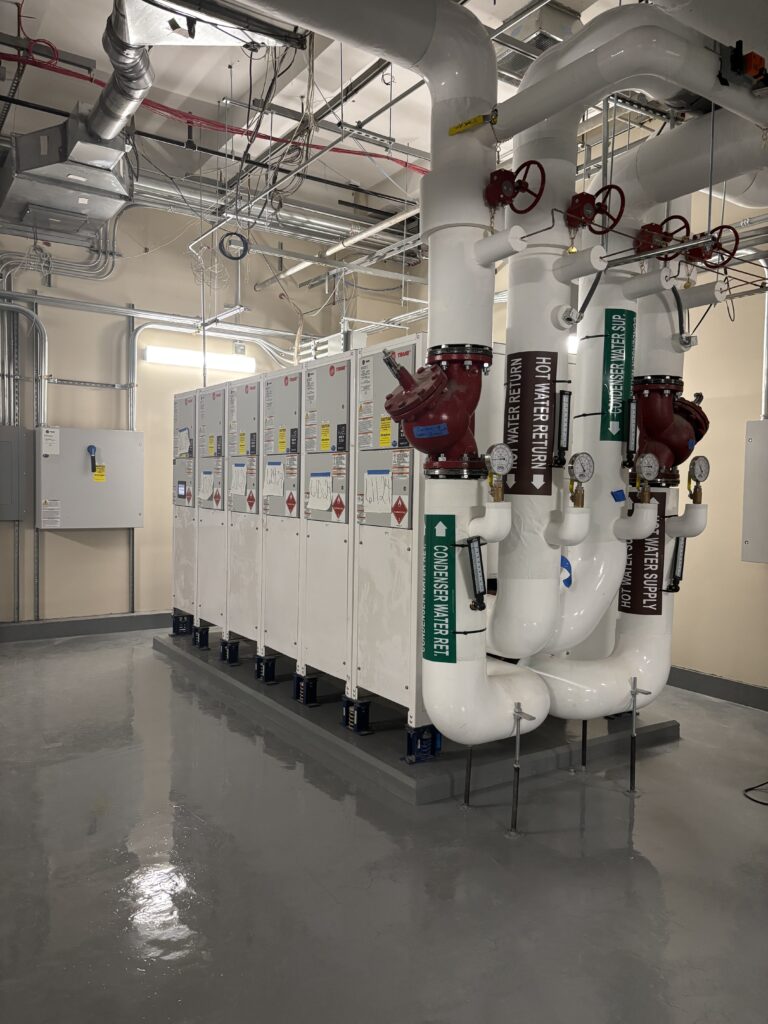
- The Modular Heat Pump Chiller: At the heart of the facility is a 180-ton modular heat pump. It extracts heat from the process cooling loop, upgrades it to a useful temperature, and distributes it to perimeter heating and ventilation systems.
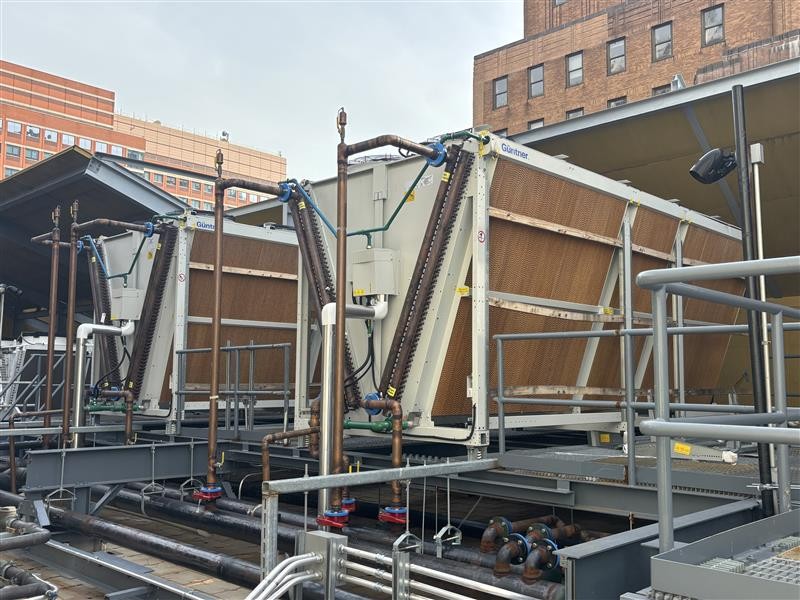
- Adiabatic Fluid Coolers: To maintain balance when the building generates more heat than it can consume, three 2,000 MBH adiabatic coolers provide supplemental rejection, using significantly less water and energy than traditional cooling towers.
🏢 Smart Distribution & Integration
The interior infrastructure was completely overhauled to align with this new energy profile:
- Low-Temp Hot Water: The removal of steam pipes made way for a low-temperature system that improves heat pump efficiency while maintaining total occupant comfort.
- Prioritized Controls: A centralized building management system (BMS) now monitors loads in real-time, ensuring the building always uses its internal energy before engaging supplemental systems.
The End Result
The end result is a building that no longer relies on fuel oil for heating and instead uses its own internal energy to meet a significant portion of its heating needs. Energy consumption has been reduced, system reliability has improved, and the building is better positioned for a low-carbon future.
Projects like 360 Bridge Street demonstrate that even in complex, always-on facilities, there are meaningful opportunities to rethink how energy is used. By connecting systems that traditionally operate in isolation and taking advantage of inherent building loads, it is possible to achieve both efficiency and resiliency without compromising performance.